VAT and taxation in Norway

VAT and taxation in Norway

In this guide, you will be provided with an overview of applicable VAT and corporation tax rules in Norway, including registration requirements and tax filing obligations for private limited liability companies. The guide also contains information on the Norwegian rules on permanent establishment relevant to foreign companies.

This article is part of our Doing Business in Norway guide.

Introduction 

When starting a business abroad as a foreign investor, it’s important to understand Norway’s tax and Value Added Tax (“VAT”) rules. These rules apply to both Norwegian and foreign companies operating in Norway. Norway generally has a broad corporate tax base, combined with treaty relief to avoid being taxed twice. These treaties typically follow the OECD Model Convention and allocate taxing rights on business profits based on whether the foreign company has a permanent establishment (“PE”) in Norway.

VAT

VAT is a tax added to most goods and services sold in Norway and the VAT standard rate is currently 25%. Some items are exempt or subject to reduced rates. A Norwegian limited company (“AS”) must register for VAT once its taxable sales exceed a certain amount, currently NOK 50 000, within a 12-month period. The company cannot charge VAT on invoices before it is registered. Late registration can trigger interest and surcharges, so it is important to monitor turnover and apply for registration at the appropriate time. In some cases, you may apply for a VAT registration ahead of reaching the necessary turnover, if you are able to provide proof that your turnover will within a reasonable time reach the threshold. Registration and reporting is done electronically in Norway. Once registered in the Norwegian Register of Business Enterprises (“NRBE”) (Nw. “Foretaksregisteret”), the company must add VAT to its sales (output VAT) and can usually deduct VAT paid on business purchases (input VAT).
 
Foreign companies doing business in Norway that are subject to VAT may also need to register for VAT, either directly or through a Norwegian VAT representative. The requirement depends on the company’s country of establishment and the nature of its Norwegian activities.

Corporate income tax

Companies that are tax resident in Norway are subject to corporate income tax on their worldwide income and assets. A company is regarded as resident in Norway when it is incorporated under Norwegian law and registered in the NRBE or its central management and control is carried out in Norway. In the assessment of central management and control, the company’s activities and organisation will also be considered.
 
Any company that is considered “tax resident” in Norway must pay corporate income tax on all their worldwide income and assets. The corporate tax rate is currently at 22%. The standard corporate tax is calculated on the company’s net profit for the year. Normally, companies pay this tax in two instalments during the first half of the year after the income was earned, in addition a third payment is made after the final tax calculation is completed, with the payment being the difference between the tax paid and the tax due. Payment is reported and made electronically in the same way as VAT. Interest is charged on residual tax.
 
Most costs incurred while earning a taxable income are deductible before corporate income tax is calculated. Special rules apply to entertainment, certain donations, and intra-group interest. Long-lived assets costing above a specified threshold must be depreciated over their useful life rather than deducted in full in the year of acquisition.

Dividends

Dividends paid to individual shareholders are subject to dividend tax. Dividends paid to corporate shareholders are largely exempt, cf. section 2-38 of the Norwegian Tax Act (Nw. “Skatteloven”).

Foreign companies and PE

Limited tax liability

Foreign companies doing business in Norway are generally taxed only on the income they earn from these activities. This is called “limited tax liability.” Most foreign companies are also taxed in their home country, but tax treaties help prevent double taxation.

PE

If Norway can tax a foreign company’s profits usually depends on whether the company has a PE in Norway. A PE means the company has a fixed place of business (like an office or factory), is involved in a long-term project, or has an agent in Norway who regularly enters into contracts on behalf of the company. If a foreign company has no PE in Norway, its business profits are generally not taxable here (though certain Norwegian-source income may still be taxed). Norway may tax the profits attributable to a PE at the standard corporate income tax rate, treating the PE as a notionally independent enterprise for income allocation purposes.

Filing for foreign companies

Foreign companies with business activities in Norway must file a corporate tax return. If they can prove their activities do not amount to a PE, they can apply for an exemption from filing. This is an administrative measure and does not affect the underlying taxation rules applicable.
 
Norwegian companies must file an annual corporate tax return electronically, usually by 31 May the year after the income was earned, exceptions until the 30 of June is usually possible by applying. This duty to file applies even if the company had no income or was set up late in the year.

Next steps?

VAT and corporate taxation are complicated legal subjects and will usually require assistance from professionals. Tax errors can be costly, and the Norwegian Tax Authority (“NTA”) (Nw. “Skattemyndighetene“) actively pursues non-compliance. The NTA can reassess a company’s tax position (to its advantage or disadvantage) within five years of the end of the relevant income year. For serious errors or fraud, this extends to ten years. Companies may voluntarily correct previously filed returns, calculated from the end of the relevant calendar year (“voluntary correction”), but only within the last three years. However, a company may request the NTA for a qualified change up to five years prior. The deadlines for NTA changes are calculated from the end of the calendar year to which the income year applies. For example, a return filed for 2021 must be corrected by end of 2026. For a company’s voluntary changes, the deadline is based on the deadline for filing of the tax return, e.g. by 31 of May.
 
At Brækhus, we regularly advise foreign companies on taxation, please contact us today for further details and an informal chat.


Last updated: 29 June 2026

 

Should Norway Follow International VAT Best Practices More Closely?

Should Norway Follow International VAT Best Practices More Closely?

Norwegian VAT law continues to deviate from international standards on neutrality and the destination principle. This selective approach creates uncertainty, double taxation, and unnecessary burdens for businesses. We believe it is time for a comprehensive reform that brings Norway in line with international best practice.

Summary

Norwegian VAT (merverdiavgift, MVA) law and its interpretation diverge from international sources, particularly EU law and OECD guidelines, on fundamental principles such as neutrality and the destination principle. We question whether these divergences are due to ignorance, arrogance, or both, and call for greater alignment with international standards.

Where Norway Gets VAT Wrong

Norwegian VAT rules and interpretations often do not sufficiently align with international sources, especially regarding the neutrality and destination principles. This misalignment is attributed to a narrow Norwegian interpretation of input VAT deduction, unique criteria for business activity, and specific rules on the place of taxation for goods and services.

International Principles Norway Can’t Afford to Ignore

The Norwegian VAT system has been influenced by OECD, EU, EEA, GATT/WTO, and ECHR. However, only the latter three are legally binding for Norway. EEA law does not require harmonization of indirect taxes, but Norway must ensure its VAT rules comply with the four freedoms and state aid rules.

EU VAT law is not part of the EEA Agreement, but Norway has voluntarily harmonized its VAT system with the EU on several occasions, especially in the context of potential EU membership and subsequent reforms.

Cherry-Picking EU and OECD Sources

There is inconsistency in Norwegian courts and government practice regarding the use of EU law and OECD VAT Guidelines as a source for interpreting Norwegian VAT law. Sometimes EU law is used as a persuasive source, especially where Norwegian and EU rules are materially similar, but often it is disregarded, especially when not in the state’s favor.

This selective approach calls for more systematic and principled use of EU and OECD sources in Norwegian VAT interpretation.

Key Areas of Divergence

  • Input VAT Deduction: Norwegian practice is more restrictive than EU law, particularly regarding deduction for transaction costs and in the start-up phase of businesses. EU law provides broader rights to deduction, emphasizing neutrality regardless of profitability or the nature of the asset (e.g., shares).
  • Definition of Business Activity: Norwegian authorities often deny VAT registration and deduction in start-up phases unless profitability is likely, contrary to EU law, which focuses on economic activity regardless of outcome.
  • Place of Taxation for Services: Norway uses the concept of “remotely deliverable services” as a criterion for where and how services should be taxed, which is not used in OECD or EU and leads to confusion and double or non-taxation in some cases.

Read more: Brækhus Nominated for «Indirect Tax Firm of the Year» by ITR EMEA Tax Awards

OECD Guidelines: The Global Consensus Norway Disregards

OECD’s “International VAT/GST Guidelines” (MVAR) are not binding but represent international consensus and are recommended for use by member states. They emphasize the destination principle and neutrality, advocating that cross-border B2B services should be taxed where the customer is located, not where the service is consumed or performed.

Norwegian rules and interpretations often diverge from these guidelines, particularly regarding registration requirements for foreign businesses and the place of taxation of certain services.

Case Law: Missed Opportunities to Align With Europe

In Norwegian Supreme Court cases such as Norwegian Claims Link, there is an inconsistent and incorrect use of international sources, and in Telenor and Skårer Syd the results are in contradiction with EU law. This approach leads to double or inappropriate taxation and/or denial of input VAT deduction contrary to international principles.

Anchoring Norwegian VAT in International Standards

The state should adopt a consistent and principled approach to the use of EU and OECD sources, and courts should perform more thorough comparative analyses when interpreting Norwegian VAT law bearing in mind core principles of VAT; the neutrality and destination principles.

We call for a comprehensive VAT reform in Norway, guided by an expert committee with strong VAT expertise as some of the previous committees has lacked VAT expertise, to align Norwegian law more closely with international principles.

Read more: Brækhus’ expertise in tax and VAT

Our team welcomes further discussion on Norwegian VAT law. For questions or comments, please contact:

VOEC Norway: VAT Compliance Guide for E-Commerce Companies

e-commerce

VOEC Norway: VAT Compliance Guide for E-Commerce Companies

The VOEC scheme is a simplified VAT system for foreign e-commerce businesses and digital service providers selling to Norwegian consumers. It streamlines the process of calculating, reporting, and paying VAT on low value goods and electronically delivered services, with a registration threshold of NOK 50,000. This guide explains the registration requirements, exemptions, and record-keeping obligations under VOEC.

Summary

  • VOEC is a simplified VAT scheme for non-established suppliers of remotely deliverable services and/or low value goods to Norwegian consumers.
  • Registration is required if sales exceed 50,000 NOK, but voluntary registration is possible before reaching this threshold.
  • The scheme applies to remotely deliverable services (including electronic services) and low value goods (under 3,000 NOK per item).

Introduction to VOEC

VOEC is a simplified VAT scheme for non-established suppliers providing remotely deliverable services and/or low value goods to consumers in Norway. Registered suppliers are required to calculate, report, and pay VAT under this scheme.

Scope and Registration Requirements

The VOEC scheme is similar to the EU IOSS scheme and is based on OECD principles. Under the VOEC register, registered foreign entities must submit quarterly returns and pay VAT. The registration threshold is NOK 50,000; however, voluntary registration is permitted before this threshold is reached. Suppliers registered under the VOEC scheme are not entitled to deduct input VAT.

Read more: Brækhus Nominated for «Indirect Tax Firm of the Year» by ITR EMEA Tax Awards

Key Clarifications and Responsibilities

The VOEC scheme is an alternative to ordinary VAT registration. If private individuals have previously imported goods and paid import VAT, it is now required that the foreign non-established supplier collects VAT at the point of sale and reports it to the Norwegian tax authorities.

It is important to clarify who is required to register in the VOEC register. Often, a marketplace operator or intermediary, rather than the seller itself, is regarded as the supplier for Norwegian VAT purposes. According to the VAT Act, if remotely deliverable services are supplied to consumers through a “provider,” the provider is considered the supplier and must register in the Norwegian VOEC register and report VAT.

Record-Keeping Requirements

All suppliers registered under the VOEC scheme are required to maintain transaction records for supplies covered by the scheme. The transaction record should include data such as the date of supply, currency, taxable amount, VAT amount, and other relevant details.

Read more: Brækhus’ expertise in tax and VAT

Do you have any questions about VOEC or need assistance? Fill out the form or get in touch with us directly today.

Contact us

This field is for validation purposes and should be left unchanged.
Name*

Contact

Brækhus Nominated for «Indirect Tax Firm of the Year» by ITR EMEA Tax Awards

Brækhus Nominated for «Indirect Tax Firm of the Year» by ITR EMEA Tax Awards

Brækhus has long been a leading player in the field of indirect tax in Norway. The nomination for «Firm of the Year» highlights that our expertise is being recognized internationally.

The nominations for the International Tax Review (ITR) EMEA Tax Awards have recently been announced, and we are proud to share that Brækhus, which has been ranked in Tier 1 for several years within Indirect Tax, has this year been nominated for «Firm of the Year» in in the Indirect Tax category.

We greatly appreciate this recognition, which is largely based on the positive feedback we have received from our clients and partners.

Read more about the nominations here.

Our lawyers are recognised by The Legal 500

Our lawyers are recognised by The Legal 500

Each year, law firms around the world are assessed and ranked by Legal 500. The rankings are based on feedback from clients and other market research. This year too, Brækhus is ranked as a Leading Firm.

In this year’s edition of Legal 500, a number of our lawyers, spread across various fields of expertise, receive recognition for their specialist skills.

Partners Alexander Mollan and Julius Berg Kaasin also achieve individual rankings and are ranked in the category ‘Next Generation Partner’. Alexander is recognised for his in-depth expertise in the field of TMT, and Julius is recognised for his expertise in the field of Intellectual Property.

We are pleased to observe that the fields in which we receive recognition by The Legal 500 represent core business areas for Brækhus. This underline our strong competence environments.

This is what some of our clients say about us:

Highly competent, proactive and we were involved well along the way

Our experience with Brækhus is that they always seek the right expertise from the right person so that challenges and problems can be highlighted quickly. This means that the right solutions are chosen in a short time

A very nice, friendly, cooperative and resolutive team. They are always willing to help and support you in your cases, propose alternative ideas and solutions, and be honest and clear about your situation

An extremely high level of expertise, insight and experience that we as clients can capitalise on. Not least very quick responses to inquiries

Corporate taxation expert from PwC becomes partner at Brækhus

Corporate taxation expert from PwC becomes partner at Brækhus

We are delighted to welcome Kim Fosshaug as a partner at Brækhus from March 1st. Fosshaug joins Brækhus from the position as a Lawyer/Director at PwC.

Kim Fosshaug is an expert in national and international corporate taxation, with specialised knowledge in international taxation and in the financial sector. He assists national and international investment companies, financing institutions, and other financial sector entities with matters related to international taxation, regulatory issues, and EU/EEA law. He also offers advice on national and international tax and corporate law, including restructuring and reorganisations, and appeals. 

– I am excited to be part of Brækhus and their renowned Tax and VAT team. Brækhus’s strong international profile and focus has been an important factor in my choice of Brækhus, says Fosshaug. 

Partner Kim Fosshaug og Partner/Head of Tax and VAT, Nils Eriksen.

Brækhus’s Tax and VAT team is among the country’s leading tax law environments, which, unlike the “big four”, is audit-independent. The team provides advice at all stages of tax law and has extensive experience in national and international tax law, VAT, customs and excise duties, and cross-border taxation of individuals. 

Brækhus assists Norwegian and international companies with establishment in Norway and abroad, and employees across borders through our well-known global mobility offering. For many of our international clients, Brækhus acts as a One-Stop-Shop – a single contact point for tax advice and all legal services. 

– Tax is a strategically important area for Brækhus. We are very pleased to have signed Kim. With Kim on board, our already strong tax and VAT team is further strengthened,” says Nils Eriksen, Partner and Head of the Tax and VAT department. 

Brækhus is ranked at the top in this year’s ITR World Tax

Brækhus is ranked at the top in this year’s ITR World Tax

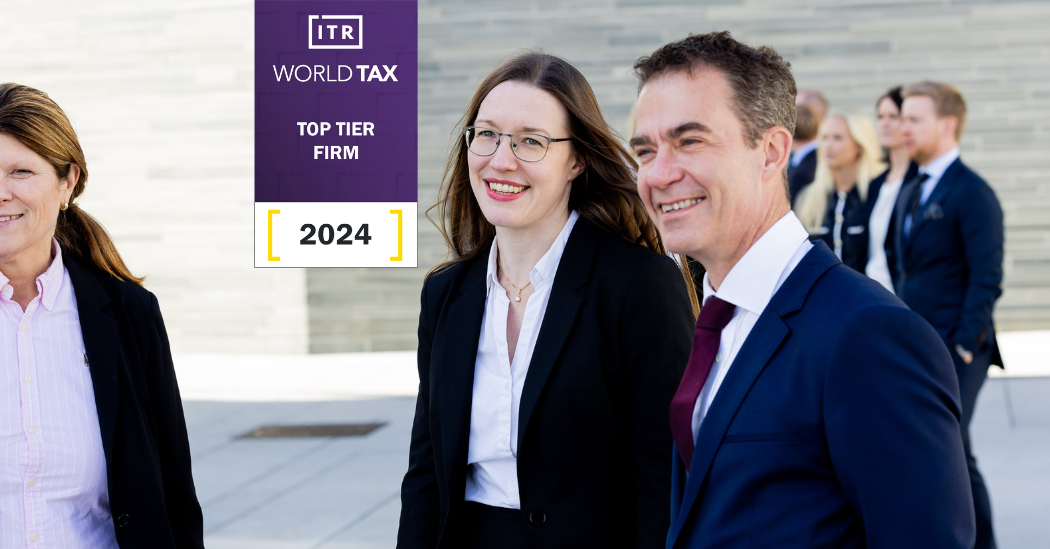
Brækhus has again achieved excellent rankings in International Tax Review World Tax for Indirect Tax, General Corporate Tax, Tax Controversy and Transactional Tax

International Tax Review World Tax has published this year’s edition of “The Comprehensive guide to the world’s leading tax firms”. We have received a top ranking for Indirect Tax (Tier 1), and very good rankings for General Corporate Tax (Tier 2), Tax Controversy (Tier 2) and Transactional Tax (Tier 3).

The rankings are based on extensive market analysis and feedback from clients and legal colleagues worldwide. We greatly appreciate the positive feedback we have received from both clients and peers, as these have been instrumental in achieving this recognition.

It is very inspiring that our clients recognize the work we do. This confirms that our strategy built on specialization and industry knowledge works

Nils Eriksen, Head of Tax and VAT in Brækhus

Our lawyers have been recognised in Legal 500 2023

Our lawyers have been recognised in Legal 500 2023

Our lawyers have been recognised in the 2023 edition of Legal 500, a comprehensive global guide to law firms. Each year, Legal 500 evaluates and ranks law firms worldwide based on client feedback and market research. In this year’s edition, Brækhus has been ranked as a Leading Firm.

15 of our lawyers across 6 practice areas have been acknowledged in this year’s edition of Legal 500. Associate Partner Alexander Mollan has been named ‘Next Generation Partner’ for his expertise in the TMT (Technology, Media, and Telecommunications) practice area.

The recognized practice areas are fundamental to Brækhus’ core business, and we take great pride in being highlighted by Legal 500 for our strong expertise in these areas.

Our firm has been ranked in the following practice areas:

What our clients say about us:

Quick response rate. Clear recommendations. Efficient use of resources. Close follow-up.

Very diverse and competent team with international knowledge and a very service-minded approach.

Takes a holistic approach, and guides on commercial aspects to make sure nothing falls between the cracks.

No fuss, straight to the point. Great people to work with. Delivers results.

Brækhus recognised by ITR World Tax 2023

Brækhus recognised by ITR World Tax 2023

Brækhus’ Tax Practice has again received good rankings in ITR World Tax.

As in previous years, we have received good rankings for Indirect Tax (Tier 2), General Corporate Tax (Tier 3) and Tax Controversy (Other notable). We would like to thank clients and peers for the recognition of Brækhus.

Nils Eriksen, who heads our Tax and VAT practice, is “highly regarded”, with his 30  years of indirect tax and extensive international experience. Nils has recently co- authored the commentary to the Norwegian VAT Act.

“It is inspiring that our clients recognize the work we do. This confirms that our strategy built on specialization and industry knowledge works”, says Nils Eriksen.

Legal 500 recognises Brækhus as Leading Firm

Legal 500 recognises Brækhus as Leading Firm

Each year, the leading ranking firm Legal 500 assesses and recommends law firms around the world. All rankings are based on feedback from clients and market insights. In this year’s ranking, Brækhus is once again ranked ‘Leading Firm’.

15 of Brækhus’ lawyers from five different practice areas are recommended in the 2021 edition of the Legal 500 ranking. This year, Senior Lawyer Alexander Mollan is ranked as ‘Rising Star’ for his expertise within TMT (Technology, Media and Telecommunications). We are pleased to see that the practice areas Brækhus is recommended for, are core areas of our business where we have specialist competencies.

Senior Lawyer Alexander Mollan is ranked as ‘Rising Star’ by The Legal 500 for his expertise in Technology, Media, and Telecommunications.

What our clients say about us:

Brækhus Advokatfirma is professional with dedicated advocates of the highest standards.

The Brækhus team is always one step ahead, ready to support their clients. Their advice is always provided in a context that makes it obvious they have deep insights into their clients’ needs.

Very strong at understanding our business as a client. Proactive and seeking closure.

Read more about the rankings on Legal500.com

Brækhus has again received good rankings in World Tax for Indirect Tax and General Corporate Tax

Brækhus has again received good rankings in World Tax for Indirect Tax and General Corporate Tax

World Tax has published this year’s edition of “The Comprehensive guide to the world’s leading tax firms”. As in previous years, we have received good rankings for Indirect Tax (Tier 2), General Corporate Tax (Tier 3) and Tax Controversy (Other notable). We would like to thank clients and peers for the recognition of Brækhus.

Nils Eriksen, who heads our Tax Practice, is “highly regarded”, with his 30 years of indirect tax and extensive international experience. Nils has recently co- authored the commentary to the Norwegian VAT Act.

“It is inspiring that our clients recognize the work we do. This confirms that our strategy built on specialization and industry knowledge works”, says Nils Eriksen.

Andersen Global Initiates expansion into the Norwegian market

Andersen Global Initiates expansion into the Norwegian market

Andersen Global enters Norway through a Collaboration Agreement with law firm Brækhus, adding breadth to its footprint in Northern Europe as the organization continues its expansion in key markets throughout the region.

Led by Managing Partner Frank C. Aase, Brækhus is a full-service law firm based in Oslo. Operating with 27 Partners and over 70 professionals, the firm’s capabilities include corporate, commercial, M&A, banking and finance, tax advisory, structuring and compliance, litigation, real estate, energy, construction, private client services, employment law, technology, e-commerce and intellectual property.

“Through transparency and uncompromisingly high professional standards, we look to form long-lasting relationships that create an added value for our clients,” Frank said. “The Collaboration Agreement with Andersen Global fits well with our international strategy and perfectly complements our existing international legal and tax liaisons. Arthur Andersen alumnus and tax Partner Nils Eriksen will assist us as we collaborate with the member firms and collaborating firms of Andersen Global. Our firm’s cultural synergy with the organization reinforces our vision and positions us to seamlessly deliver best-in-class and innovative solutions globally.”

“Brækhus is highly regarded for their experience, expertise and ability to provide clients with independent, integrated solutions,” said Andersen Global Chairman and Andersen CEO Mark Vorsatz. “Norway is a very important market in our expansion strategy, and our inimitable chemistry with Nils, Frank and their team provides an outstanding complement to our existing platform in the region.”

Andersen Global is an international association of legally separate, independent member firms comprised of tax and legal professionals around the world. Established in 2013 by U.S. member firm Andersen Tax LLC, Andersen Global now has more than 7,000 professionals worldwide and a presence in over 277 locations through its member firms and collaborating firms.

Source: Andersen Global

Brækhus has once again been recognised among the law firms with the world’s leading VAT experts

Brækhus has once again been recognised among the law firms with the world’s leading VAT experts

The International Tax Review has released its 2020 edition of its Indirect Tax Leaders, an annual comprehensive guide to the world’s leading VAT experts. We are proud to announce that Nils Eriksen, a partner in Brækhus, is included in this list for the ninth year in a row.

The recognition is based on nominations from clients and lawyers in other law firms who consider the candidate to have distinguished themselves in their field.

Commenting on the ranking, tax department head Antonio Holstad stated: “We are very proud of Nils Eriksen’s recognition as one of the world’s best indirect tax advisors. This ranking serves as a strong endorsement of our efforts to continuously drive the practice forward and deliver even better services to our clients. We would like to thank our peers for their feedback and our valued clients for the trust that they continue to place with us and our indirect taxation team.

Brækhus has once again been recognised amongst the law firms with the world’s leading VAT experts

Brækhus has once again been recognised amongst the law firms with the world’s leading VAT experts

The International Tax Review publishes an annual overview of the world’s leading VAT experts and recently published Indirect Tax Leaders 2018. We are proud to announce that Nils Eriksen, a partner in Brækhus, is included in this list for the seventh year in a row.

Commenting on the ranking, tax department head Antonio Holstad stated: “We are very proud of Nils Eriksen‘s recognition as one of the world’s best indirect tax advisors. This ranking is a testament to the hard work and dedication demonstrated by himself and his colleagues within our indirect taxation practice, and is richly deserved”.